When Dropping Collision Coverage Makes Sense
The break-even math behind the 10 percent rule: how to compare your collision premium against your car's actual value and decide with numbers, not folklore.
You have probably heard the rule of thumb: once your car gets old, drop collision coverage. What you rarely hear is where the line actually sits, and why. The honest answer is that it is not a birthday threshold - it is a comparison between two numbers you can look up in twenty minutes. This article walks through that comparison with real arithmetic: what the coverage actually pays, how to compute what it costs you per year of protection, and the specific situations where the math flips back in favor of keeping it.
What collision and comprehensive actually cover
Collision coverage pays to repair or replace your car after a crash, regardless of fault. Comprehensive covers the non-crash perils: theft, hail, flood, fire, falling branches, and windshield damage in most states. Neither pays for the other driver's car (liability does that), and neither pays what you paid for the car - both pay the actual cash value (ACV), which is the depreciated used-market value minus your deductible.
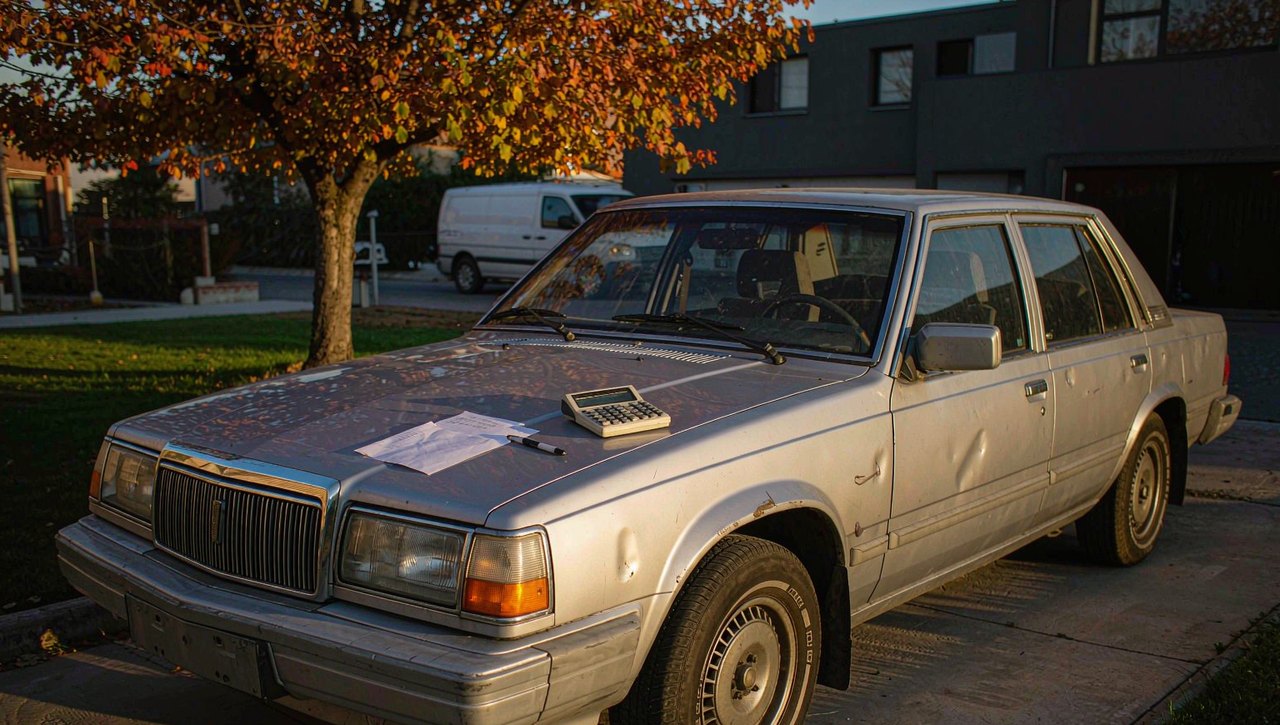
That last detail is the whole story. A 2014 sedan that sold for $22,000 new might carry an ACV of $6,000 today. If it is totaled, the insurer writes a check for roughly $5,500 after a $500 deductible. So the question is never "should I insure a $22,000 car" - it is "should I pay several hundred dollars a year to protect $6,000 of value."
The break-even math, step by step
Every decision here reduces to one comparison: what the coverage costs per year versus what you can realistically expect it to pay out. Here is the worked example with its assumptions stated up front.
Assumptions: the car is a 2014 sedan with an ACV of $6,000 (checked against a used-value guide, not a guess). Your deductible is $500. Your insurer quotes $480 per year for collision plus comprehensive, versus $310 for liability only. The difference - $170 per year in this example, but often $400 to $800 for drivers with any recent tickets or accidents - is what the physical damage protection actually costs you.
Now the expected value side. Expected annual payout equals the probability of a total loss in a year multiplied by what you would collect: $6,000 − $500 = $5,500. Even with a deliberately generous 5 percent annual chance of totaling the car - above what low-mileage, experienced drivers actually experience - the expected payout is 0.05 × $5,500 = $275 per year.
Compare that against the premium. If the physical damage portion costs $480, you are paying $480 for an expected $275 of payout. If it costs $170 (a clean record, rural area), you are paying $170 for the same expected $275 - and the coverage suddenly looks cheap. Same car, opposite decisions, purely because of the driver's rate.
The multi-year view
One year of numbers can mislead, so widen the window. Dropping the coverage saves a fixed amount every year with certainty: in the example above, $480 × 3 = $1,440 over three years. Keeping it protects against one event: losing roughly $5,500 of value in an afternoon.
So the real question is whether you would rather certain-save $1,440 over three years, or keep a 5-to-15 percent chance (over those same three years, at roughly 2 to 5 percent per year) of eating a $5,500 loss. There is no universally correct answer - it depends on what $5,500 would do to your finances. Which leads to the second test.
Can you absorb the loss? The self-insurance test
Dropping collision is not really "dropping insurance" - it is becoming your own insurer, and insurers need reserves. Before you cancel, check that the replacement cost of the car is money you could actually produce: not your emergency fund's ceiling, but a realistic amount you hold in cash. If a total loss tomorrow would force you into a car loan you would not otherwise take, the coverage is doing exactly what insurance is for, no matter what the percentages say.
A practical standard: if the car's ACV is an amount you could cover from savings within a month without borrowing, self-insuring is viable. If it is not, keep the coverage or split the difference with a higher deductible while you build the buffer - the emergency fund sizing guide covers how much of that buffer belongs in cash.
When the math says keep the coverage
- The car carries a loan or lease. Lenders contractually require comprehensive and collision until the balance is paid - this is not a decision available to you, and carrying it anyway avoids force-placed insurance, which costs far more.
- You are a statistically expensive driver. High annual mileage, a new driver on the policy, or a recent at-fault accident raises your claim probability, which raises the expected payout the coverage delivers - and simultaneously raises your premium, so run both numbers rather than assuming.
- The car is worth more than $8,000 to $10,000. Below the 10 percent line, the premium usually compares favorably to the expected payout, especially for comprehensive claims like theft and hail that have nothing to do with how well you drive.
- A $5,000+ loss would hurt. This is the self-insurance test failing. Percentages do not override cash reality.
When the math says drop it
- Physical damage premium is at or above roughly 10 percent of ACV, and the expected-payout comparison confirms it: paying $600 a year to protect an expected $250 is a bad trade at any driving record.
- The ACV is small in absolute terms. A car worth $3,000 pays at most $2,500 after deductible; protecting that with a $450 annual premium means the coverage could cost more over three years than any total-loss check would ever deliver.
- You hold the replacement cost in savings and your driving profile is genuinely low-risk: low mileage, clean record, suburban or rural driving.
The middle paths most people should take first
Dropping versus keeping is not binary, and the intermediate options are often the best deal in the whole policy. First, raising the deductible: moving from $500 to $1,000 commonly cuts the collision premium by 10 to 25 percent (varies widely by insurer - price both before assuming), which narrows the gap in the break-even math without removing the coverage. The deductible math guide walks that trade-off in detail.
Second, drop collision but keep comprehensive. Comprehensive is usually the cheaper half of the pair - often well under half the collision premium - and it covers the perils most likely to total an old car that mostly sits parked: theft, flood, fire, hail, and the deer strike on a rural commute. Collision is the expensive half, because it pays for the crashes; comprehensive is the cheap half, because it pays for the lightning strike.
Third, re-shop the whole policy before dropping anything. The physical-damage premium that crosses the 10 percent line with Insurer A is often comfortably below it with Insurer B - a driver profile that looks "expensive" is often just expensively priced. If a fresh quote still fails the math, then cancel.
How to actually do this in twenty minutes
- Price the car. Look up the private-party or trade-in range on a used-value guide and write down the midpoint - that is your working ACV.
- Get the two premiums. Call or use the insurer's site for a quote with collision and comprehensive, and one without both. The difference is the number that matters.
- Run the two tests. Divide the difference by the ACV - at or above 10 percent, you are past the rule-of-thumb line. Then divide the difference by (ACV minus deductible) to get the break-even claim probability, and judge honestly whether your annual odds of a total loss exceed it.
- Check the loan status and your cash buffer. Financed cars keep the coverage. Owned cars pass or fail the self-insurance test.
- Decide, and calendar a revisit. The math changes every year as the car depreciates and premiums move; a note to re-run this annually keeps the decision current. If you are also weighing whether the car itself still makes sense to keep, the true cost of owning a used car puts this premium decision in the full annual picture.
Edge cases worth knowing
- Total-loss payouts settle at ACV, minus deductible. The check reflects your car's specific condition and mileage, so a well-documented, clean example of a popular model reliably collects more than the guide's low end. Keep maintenance records.
- If you owe more than the ACV - common in the first years of a loan - a total loss leaves a gap the coverage does not pay; that is what gap insurance is for. Dropping coverage is irrelevant here anyway, since the lender requires it.
- After a not-at-fault accident, coverage still pays you. The other driver's liability insurance is supposed to make you whole, but claims take weeks; your own collision coverage pays now and lets the insurers fight over reimbursement. This is a real, underappreciated benefit while the car still has meaningful value.
- Comprehensive claims rarely raise your rate much; at-fault collision claims do. Weighing which half to keep depends partly on which claims you are likelier to file.
The bottom line
Dropping collision coverage is a bet you can price before placing it. Add up what physical damage coverage costs you per year, compare it to the car's actual cash value minus your deductible, and check that you could write the replacement check yourself. Cross the 10 percent line with a paid-off car and a real cash buffer - drop it. Sit below the line, or finance the car, or flinch at the thought of eating a $5,000 loss - keep it, or split the difference with a higher deductible and comprehensive-only. The rule of thumb is just the compressed version of this arithmetic, and the arithmetic takes twenty minutes.
More numbers-first guides are in the Ledger & Cents blog index, including annual versus monthly premium pricing if you are also deciding how to pay for whatever coverage you keep.
This article is general financial information, not insurance, legal, or financial advice. Coverage availability, pricing, and total-loss settlement practices vary by state and insurer. Consult a licensed insurance professional before changing your policy.