What a Used Car Really Costs Per Year: Every Line Item, With Numbers
A $18,000 used car financed at 8.2% costs $366.70 a month — and about $501 a month on top of that. Fuel, insurance, maintenance, tires, depreciation and registration, line by line, so the budget matches reality.
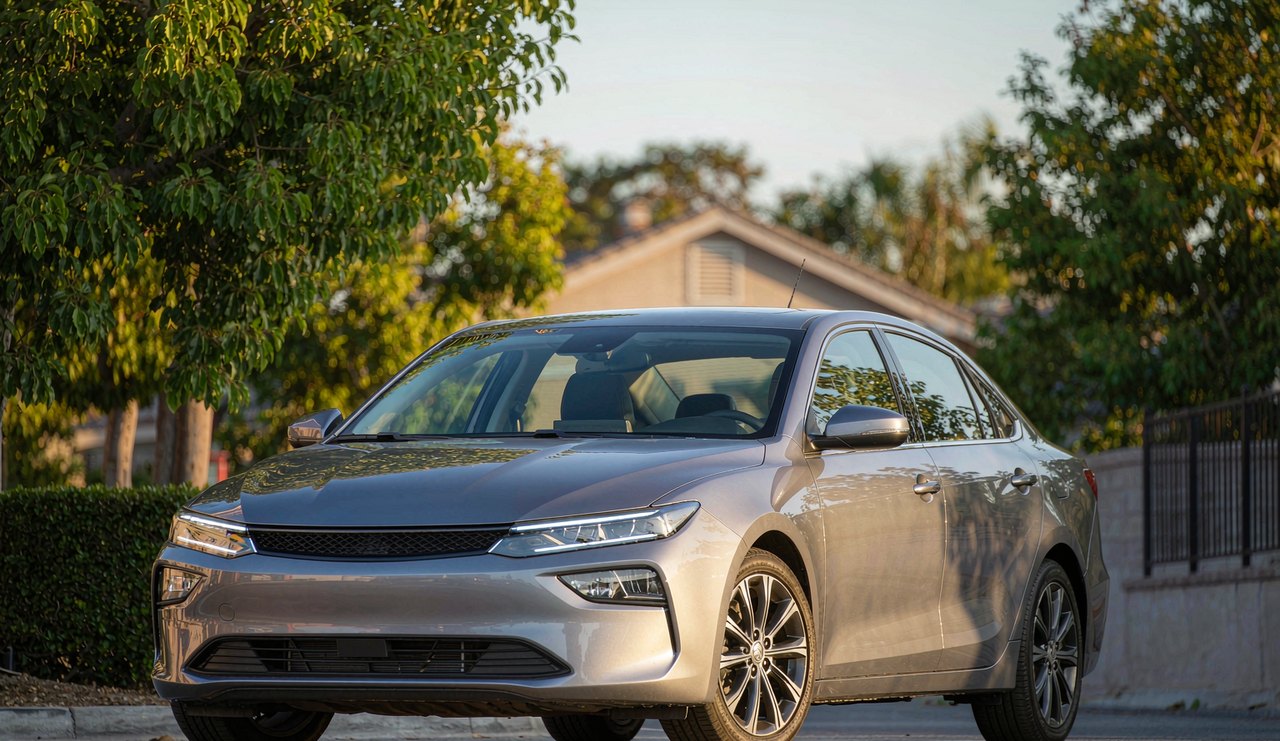
When people budget for a car, they budget for the payment. Then the insurance bill, the registration, the first set of tires and the repair shop arrive, and the "affordable" car quietly costs double. The fix is not a better car — it is a complete line-item estimate before you buy. Here is one, built for a realistic mid-range example: a $18,000 three-year-old used sedan, financed, driven 10,000 miles a year.
The purchase: financing $18,000
With a down payment kept out of the picture for simplicity, borrowing $18,000 over 60 months at 8.2% APR (a typical rate for used-car loans for a buyer with decent credit) works out to:
- Monthly payment: $366.70
- Total interest over the loan: $4,002
- Total paid for the car: $22,002
That last number is worth pausing on: at current used-car loan rates, financing adds more than $4,000 to a car's price. The loan term does most of the damage — a 48-month loan at the same rate costs $441.12 a month with $3,174 total interest, while stretching to 72 months drops the payment to $317.36 but raises total interest to $4,850. The longest available term is rarely the cheapest car; it is just the smallest monthly number on the contract.
The lines nobody puts in the advertisement
Every figure below is an explicit assumption — swap in your own quotes and driving pattern and the method still holds.
set every 4 years, set aside annually| Cost line | Per year | Assumption |
|---|---|---|
| Insurance | $1,450 | Full coverage for a driver in their 30s with a clean record, mid-size sedan — get real quotes for your ZIP code before buying |
| Fuel | $1,133 | 10,000 mi ÷ 30 mpg × $3.40/gal |
| Maintenance | $700 | Oil changes, brakes, one mid-size repair per year, averaged |
| Tires | $150 | $600 |
| Registration & fees | $180 | Varies heavily by state |
| Running total | $6,013 | ≈ $501/month |
Insurance before the purchase, not after. The $1,450 figure above is only an example. The same car can quote at $900 or $2,200 a year depending on your ZIP code, driving record and coverage choices — and insurers price by model, not price tag. Get quotes on the exact year/make/model before signing, because a "cheap" car with expensive insurance is not cheap.
Depreciation: the biggest cost you never pay
You will never see a bill for depreciation, yet for a car this price it is typically the single largest annual cost. A three-year-old sedan bought for $18,000 might be worth about $13,200 three years later — a loss of roughly $2,400 a year. That is more than the fuel and the tires combined, and it happens whether or not you drive the car much.
Depreciation is also why the used-versus-new argument is mostly a depreciation argument: the heaviest years of value loss are someone else's by the time a car is three years old, and the curve flattens from there.
Putting it all together
Now the honest monthly number:
- Year 1, with the loan: $6,013 running costs + $4,400 of payments = $10,414 — about $868 a month.
- Per mile (year 1): $10,414 ÷ 10,000 = $1.04 per mile. A 25-mile-each-way commute "costs" about $13 a day in car terms alone.
- After the loan is paid (year 6+): running costs only, about $501 a month or $0.60 per mile — assuming the car ages into somewhat higher maintenance, call it $550.
Two conclusions fall straight out of the table. First, the payment is barely half the true cost in year one — budgeting $366.70 a month for this car would understate reality by more than $500. Second, how long you keep the car matters more than almost anything else: years 6 through 10 cost about $550 a month total, while trading up restarts the $868 clock.
The repairs wildcard — and how to cap it
The $700 maintenance line is an average, and averages hide the worst feature of used-car ownership: costs that arrive as $1,400 invoices instead of $58 monthly drips. Three habits turn that wildcard into a bounded number:
- Pay $150-$200 for a pre-purchase inspection. An independent mechanic checking the exact car before you buy is the cheapest insurance in the entire transaction. It regularly finds $1,000+ problems, and it is also negotiating leverage.
- Keep a repair reserve, not a repair hope. Set aside another $50 a month on top of the maintenance line — about $600 a year — so a failed alternator is an inconvenience rather than a credit card balance. This is the same logic as the emergency fund, just scoped to one appliance with wheels.
- Use a retire-or-repair rule. When a repair quote arrives, compare it against the car's current value and the annual cost of its replacement (about $10,400 in year one, per the table below). A $1,800 repair on a car worth $12,000, against a $10,400 replacement year, is almost always worth paying.
A quick word on leasing, since the payment looks better
A lease on a similar car might advertise $320 a month — lower than this example's year-one $868. But a lease is a perpetual payment: you rent the depreciation years and hand the car back, so the $501 running-cost layer stacks on top of a payment that never ends. Buying the car in this example and keeping it ten years spreads the expensive years across a decade in which four of them cost $550 a month total. Leasing only wins the per-year math if you would buy a new car every three years anyway — in which case the comparison is not with this plan at all.
How to push the real number down
- Shop insurance at every renewal, not just at purchase. Loyalty is not rewarded; the same coverage routinely moves by $300+ a year between carriers.
- Raise the deductible if you have an emergency fund that could absorb it — going from $500 to $1,000 typically trims $150-$300 a year in premium.
- Prefer the 48-month loan over 60 or 72, even if it means a cheaper car. Interest is pure cost; the monthly payment is not.
- Keep it past the payoff. Every year driven after the loan ends is a year of $550-a-month motoring instead of $868 — the single biggest saving available.
- Fix your driving habits, not just the car. Fuel is only $1,133 of the $6,013 here; obsessing over 30 vs 32 mpg while overpaying on insurance optimizes the small line.
A car purchase is one of the largest recurring costs in most budgets, and it deserves the same honesty as any other line. Work the table with your own quotes, then build the monthly plan around the true number — the budget system on this site has a place for exactly this kind of lumpy annual expense, and the emergency fund guide explains the buffer that absorbs the surprise repair without a credit card. The tools page calculators handle the loan arithmetic.
The rule of thumb if you remember nothing else: whatever the payment is, the car really costs about 1.6 to 1.9 times that while you are still paying it off. Budget for the big number and the car stops being a surprise machine.

