Solar Panel Payback: Running the Real Numbers Yourself
A quote says 6-8 years to payback. The math says it depends on your rate, your roof, and your utility's export rules. Here is the full worked calculation with every assumption on the table.
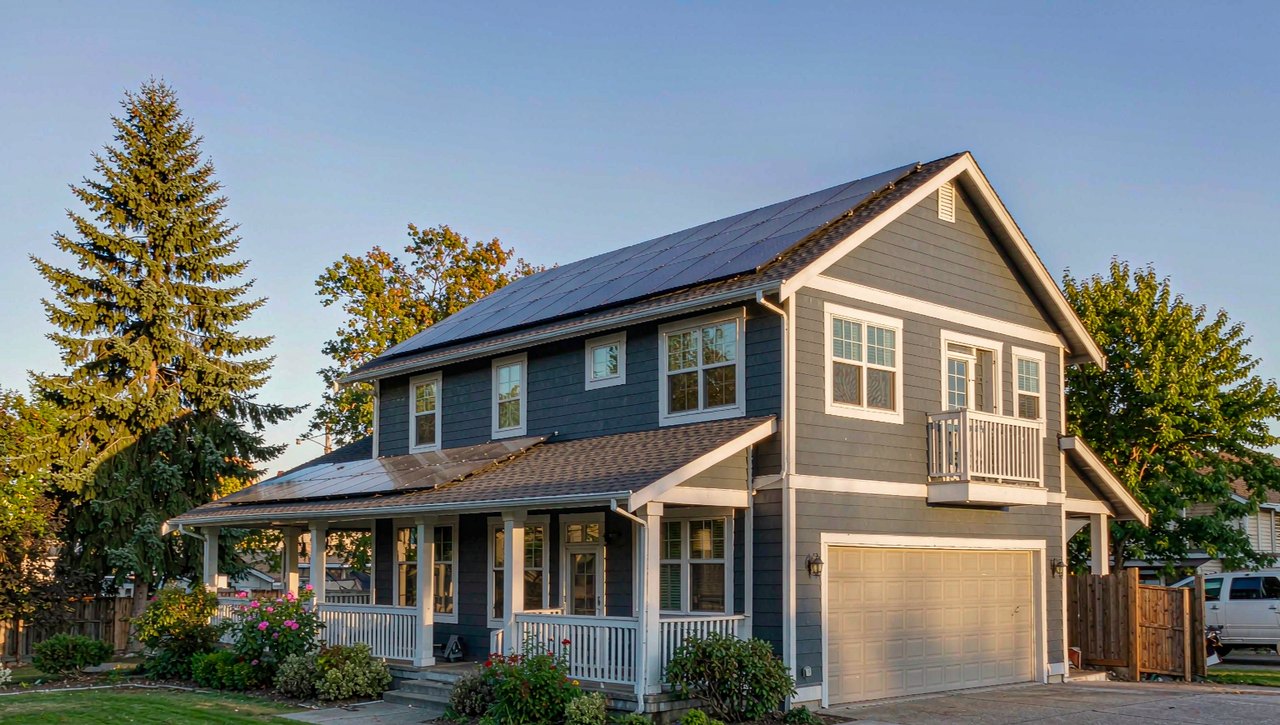
Solar sales pitches love one number: "your system pays for itself in 6 to 8 years." Sometimes that is true. Often it is true only under flattering assumptions about your roof, your utility's rates, and your state's net metering rules. The honest version of solar math takes about fifteen minutes to run yourself, and once you have run it, a quote becomes something you can actually evaluate. This guide walks through the calculation with realistic worked numbers, then stress-tests the result against the things that most often break it.
The five inputs that decide everything
Before any arithmetic, you need five numbers. Two come from the quote, two come from your own records, and one comes from the tax code.
| Input | Where it comes from | Typical range |
|---|---|---|
| Installed cost per watt | The quote (total price ÷ system watts) | $2.50 - $3.50 / W |
| System size | The quote (sized to your usage) | 5 - 12 kW |
| Production per installed kW | Sunshine at your location (PVWatts estimate) | 1,100 - 1,600 kWh/kW/yr |
| Your electricity rate | Your utility bill (total ÷ kWh used) | $0.12 - $0.30 / kWh |
| Federal tax credit | IRS Residential Clean Energy Credit (Form 5695) | 30% of cost |
Verify every one of these yourself. Production claims on quotes run optimistic, especially with "perfect south roof, no shading" assumptions; your actual rate is on the bill, not in the brochure; and the credit percentage is a matter of current law, so confirm the rules for the year you install rather than relying on an article, including this one.
The worked example
Here is a representative mid-size installation, with every number stated so you can substitute your own.
System and cost. An 8 kW rooftop system at $2.60 per watt costs $20,800 gross. The 30% federal credit returns $6,240, bringing the net cost to $14,560. The credit only helps if you owe that much federal income tax in the year of installation - it is a credit against tax, not a rebate cheque, and excess can generally be carried forward under current rules.
Production and savings. At a typical 1,300 kWh per installed kW per year, the system produces about 10,400 kWh annually. Against a rate of $0.17 per kWh, the first year displaces roughly $1,768 of electricity.
Simple payback. Divide net cost by first-year savings: $14,560 ÷ $1,768 ≈ 8.2 years. That is the headline number, and it already assumes you pay cash.
The more honest version. Electricity rates tend to rise over time and panels slowly lose output - roughly 0.5% to 0.9% per year for modern modules. Assume rates rise 2.5% a year and the system degrades 0.8% a year, so savings grow about 1.7% annually. Under those assumptions the cumulative savings cross the net cost around year 8, and the system goes on producing for decades: by year 25, cumulative savings reach about $54,400, a net gain of roughly $39,800 before any equipment replacement.
Sanity-check the two moveable inputs. At $0.12 per kWh, first-year savings fall to about $1,250 and simple payback stretches to roughly 11.7 years - solar is a mediocre deal in cheap-power states. At $0.25 per kWh, savings are about $2,600 a year and payback compresses to under 6 years - solar is often a strong deal in expensive-power states. The panel math barely changes between states; the electricity rate does most of the work.
The same system, rerun at three electricity rates, shows how much of the decision is really about your utility bill rather than about panels:
| Rate ($/kWh) | Year-1 savings | Simple payback | 25-yr net gain* |
|---|---|---|---|
| $0.12 | $1,248 | 11.7 yrs | ≈ $23,800 |
| $0.17 | $1,768 | 8.2 yrs | ≈ $39,800 |
| $0.25 | $2,600 | 5.6 yrs | ≈ $65,400 |
*Assumes the same 2.5% rate growth and 0.8% degradation in every row, before the inverter replacement, and identical production. Real quotes in cheap-power states also tend to price per watt slightly differently, but the dominant variable is the rate.
Expressed as a return instead of a payback
Payback years are intuitive but hide the tail: a system that pays back in 8 years and then produces 17 more years is very different from one that pays back in 8 years and dies in year 9. The cleaner comparison is an internal rate of return. For the worked example - net cost $14,560 up front, savings growing 1.7% a year for 25 years, plus one inverter replacement - the return works out to roughly 12.5% annualized, tax-free, because the "income" is avoided bills rather than taxable interest.
That comparison is the real reason solar pencils out for many homeowners: a guaranteed-ish, untaxed stream of avoided costs that competes well against a 4-5% yield from a savings account, while carrying its own risks - your roof, your utility's rule changes, and your own continued residence in the house. If you want to brush up on comparing returns properly, our guide to how high-yield savings returns actually work covers the interest side of that trade-off.
The four things that most often break the math
1. Net metering is not universal or permanent. The savings number above assumes every exported kWh earns roughly what an imported kWh costs. Several states have moved - or are moving - to pay exported solar at a lower wholesale-ish rate, which can cut real savings by a third or more, especially if you are away during the day. Read your utility's current net metering or "successor tariff" terms before signing; the quote will not volunteer this.
2. You might move. Solar adds some resale value, but studies of home sales consistently find you recover less than full cost, and a financed system with a lien complicates the sale. If a move is plausible within the payback window, the effective return drops sharply. Leases and power-purchase agreements are worse on this front: they can be a genuine obstacle at sale time because the buyer must assume the contract.
3. The roof underneath ages on its own schedule. Panels last 25-30 years; composition shingle roofs often need replacement around year 20. Pulling and reinstalling a system for a re-roof can cost $2,000 - $5,000. If your roof has under 10 years of life left, re-roof first. Otherwise you are paying twice for the same square metres - a trap similar in spirit to the deferred-cost accounting problems described in our HOA and ownership-cost guide.
4. The inverter dies before the panels do. String inverters typically need one replacement in the system's life, around year 10 to 15, at $1,500 - $3,000 installed. Micro-inverters spread that cost across the roof but fail panel by panel. Budget for it: in the worked example, a $2,000 inverter around year 12 trims the 25-year net gain from about $39,800 to roughly $37,800, and the annualized return by a few tenths of a point.
Cash, loan, or lease?
Cash delivers the full return described above. A loan preserves the tax credit (unlike a lease) but adds interest: financing the same $14,560 at 7% over 20 years costs about $113 a month and $27,100 in total payments - nearly the gross system price again. The deal still works if the loan rate is low and the monthly payment is below the avoided bill, but every point of interest directly subtracts from the 12.5% return. Compare the all-in cost of the financed system against a cash quote from a different installer; aggressive lender fees hide in the payment. The general principle of comparing payment plans against totals is the same one covered in our lease-versus-buy math.
A lease or PPA asks nothing up front and saves maybe 10-20% versus the utility bill, but it takes the tax credit, the appreciation, and most of the upside for itself. As a wealth decision it is usually the weakest of the three; as a "reduce my bill this month with zero risk" decision, it is at least coherent.
A five-minute checklist before you sign
Ask the installer for the PVWatts or equivalent production estimate and check it against 1,100-1,600 kWh per kW for your region. Get three quotes and compute the cost per watt on each - spread between installers regularly exceeds 30% for identical hardware. Confirm your utility's current export compensation in writing. Check the warranty sheet: 25 years on panels, 10-25 on the inverter, and who pays labour for a warranty call. And if the quote bundles a roof repair or a "generation meter upgrade," price those items separately, because bundled small items are where margins hide. The same show-your-work discipline applies to any large purchase; our used-car cost breakdown in the true yearly cost of a used car uses the identical method.
Run your own numbers first, treat the salesperson's payback claim as a hypothesis, and the solar decision becomes what it should have been all along: a long bond-like investment with a roof attached, priced against your own electricity bill rather than against anyone's commission.
This article is general financial information, not personalized investment, tax, or legal advice. Tax credit rules, utility tariffs, and equipment costs change; verify current figures with the IRS, your utility, and licensed professionals before committing money.