HOA Fees: The Real Cost of That Lower Price
A $450 monthly fee is mortgage-money that buys no equity. The fee math, the DTI effect, the reserve study warning signs, and the ten questions to ask before you buy.
A monthly HOA fee is the quiet line item that decides whether the cheaper condo is actually cheaper. Lenders count it, it grows almost every year, it does not buy you anything you can resell, and when the building's reserve fund runs short it can turn into a five-figure bill that arrives with your name on it. This guide puts numbers on all four of those effects so you can compare two homes on equal footing instead of comparing list prices.
What the fee actually buys
An HOA fee covers the shared costs of the property and, in a condominium, some of the costs a single-family owner would pay directly. Typical line items: building and common-area insurance (the "master policy"), landscaping, trash, water or sewer in many buildings, exterior maintenance and painting cycles, an on-site manager or management company contract, utilities for common spaces, and the reserve fund contribution set aside for future roof, elevator, and pavement replacement.
Typical ranges in the United States as of the last few years:
- Single-family neighborhoods: roughly $25 to $150 per month, mostly for common areas and amenities.
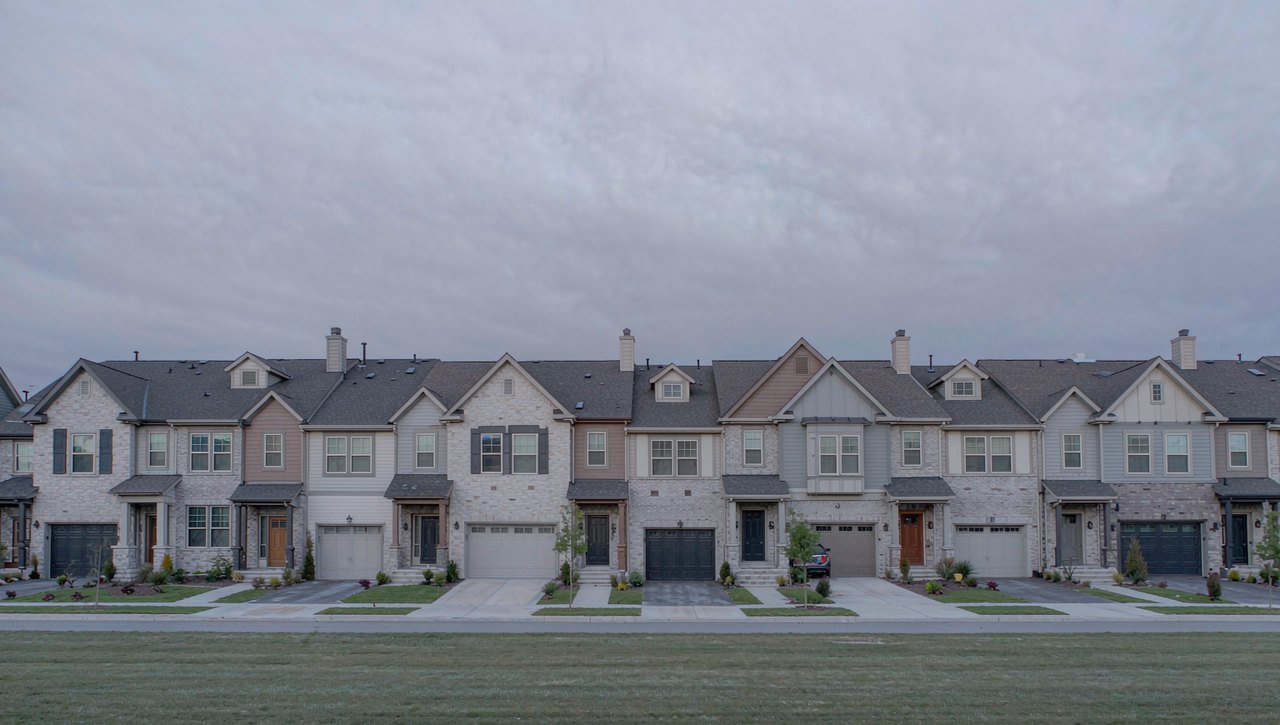
- Townhouses: roughly $100 to $300 per month.
- Condominiums: commonly $250 to $550 per month, more where the building has a doorman, elevator, pool, or high insurance costs.
A high fee is not automatically bad - a building with a properly funded reserve and a new roof can be worth more than a low-fee building that is one storm away from a special assessment. The fee's value depends on what it prevents, which is why the reserve study (below) matters more than the fee itself.
Effect 1: the fee compounds like a mortgage you never pay off
Fees rise with insurance premiums, labor, and deferred maintenance - typically 3 to 5 percent a year in ordinary years, and more after a bad insurance renewal. A $450 fee is not $450 for long. Over ten years at 4 percent annual growth:
5,400 × ((1.0410 − 1) / 0.04) = 5,400 × 12.006 = $64,832
That is $64,832 of payments over a decade for a $450 starting fee - money that buys housing services but builds no equity. Your mortgage principal payment, by contrast, is a transfer from your bank account to your net worth. Comparing them side by side is the core of the math in the next section.
Effect 2: the list-price comparison is usually wrong
Buyers anchor on the mortgage payment and treat the fee as a rounding error. Worked example, both homes on a 30-year loan at 6.5 percent, 20 percent down:
| Home A (no HOA) | Home B (condo) | |
|---|---|---|
| List price | $400,000 | $350,000 |
| Loan amount (80%) | $320,000 | $280,000 |
| Principal & interest | $2,023/mo | $1,770/mo |
| HOA fee | $0 | $450/mo |
| Taxes + insurance (similar) | $550/mo | $520/mo |
| Total monthly | $2,573 | $2,840 |
The $50,000 cheaper house costs $267 more per month. The payment factors: $320,000 × 6.32 per $1,000 = $2,023, and $280,000 × 6.32 = $1,770. And the gap widens - the HOA grows about 4 percent a year while the fixed-rate mortgage payment never moves. By year eight, the fee alone is roughly $615 a month and the total gap approaches $430.
Effect 3: the fee shrinks what you qualify for
Lenders include the HOA fee in the debt-to-income calculation alongside taxes, insurance, and all debt payments. At a maximum DTI of 43 percent, every $450 of monthly fee requires about $1,046 of gross monthly income ($450 / 0.43) to qualify for the same loan. On a $100,000 salary that is roughly $12,500 of buying power gone before you have chosen a countertop. If you are near the qualification line, the fee matters more than the interest rate.
Effect 4: special assessments - the fee that is not the fee
When the reserve fund cannot cover a major repair, the association levies a special assessment, split per unit. A $1.2 million roof across 120 units is $10,000 each, usually payable within months. This is the number that never appears on Zillow. You size the risk from the reserve study:
- Funded ratio below 70 percent: the association holds much less than the study says it should. Common and a yellow flag; below 50 percent is a real warning.
- Reserve study older than 3 years: ask for an update. Buildings change; studies go stale.
- Percentage of owners delinquent on dues: above 10 to 15 percent, every shortfall gets shared by the remaining owners.
- Active litigation involving the association: legal fees and insurance renewals both flow to the budget.
- Insurance master policy deductible: $25,000 deductibles became $100,000+ in many markets; who pays it after a claim is a budget question.
- Special assessments in the last 5 years: one is a repair, a pattern is a funding philosophy.
What is and is not deductible
On a primary residence, HOA fees are not tax-deductible, even though mortgage interest may be (within IRS limits). On a rental property, HOA fees are an operating expense against rental income. If you own a home office, only the share of the fee allocable to the office space used exclusively for business applies. Plan on the fee being fully after-tax money - which makes its effective cost higher than the mortgage payment it replaces in the comparison above.
The ten questions to ask before you commit
- Can I see the last two years of budget-versus-actual reports?
- Can I see the most recent reserve study, and what is the funded ratio?
- What special assessments have been levied in the past five years?
- How many owners are delinquent on dues right now?
- Is the association a party to any litigation?
- What is the master insurance deductible, and has the policy renewed recently?
- What percentage of units are rentals, and is there a rental cap?
- How often have dues increased over the past ten years, and by how much on average?
- Which utilities and services does the fee include - and which big ones (electric, gas, internet) does it not?
- Are there planned projects (paint cycle, elevator, repiping) already approved and funded?
A management company that answers these in writing within a week is itself a positive signal. Refusal or delay is a signal too.
Adjust the fee for what it replaces
Before comparing a fee-charging home to a no-fee home, subtract the costs the fee already covers. If the fee includes water, sewer, trash, and exterior insurance, a single-family owner pays those separately - typically $80 to $160 per month combined for water/sewer/trash, plus the share of homeowner's insurance that covers the structure. That does not make a $450 fee cost $300; it makes the honest comparison $450 versus $150, not $450 versus zero. Net of offsets, a condo with a $300 fee that bundles water, trash, and exterior maintenance can genuinely beat a house with higher utilities and insurance - the offsets are real, they are just smaller than the fee.
Build the offset list from the association's budget itself, not from the listing: management companies publish exactly which utilities and services the fee funds. Anything the fee covers that you would have bought anyway is an offset; amenities you will not use (a pool, a golf membership) are not - do not let a brochure turn optional facilities into savings.
Insurance: two policies, one roof
In a condominium, the association's master policy covers the structure and common areas; your individual policy (the HO-6 "walls-in" policy) covers your interior finishes, belongings, and liability. That split creates two failure modes worth checking. First, deductible transfer: when the master policy's deductible (now commonly $25,000 to $100,000 after a claim) is assessed back to owners after a building claim, standard HO-6 policies may not cover it unless you carry loss assessment coverage - cheap to add, expensive to discover missing. Second, coverage drift: if the association quietly reduced master-policy scope to control premiums after an insurance renewal, your walls-in policy may be covering less than you assume. Both are questions for the ten-question list above.
What the fee does to resale
Fees suppress prices in a predictable way: buyers discount the monthly obligation roughly the same way lenders do. Two otherwise identical units where one carries $200 more in monthly fees tend to sell for roughly the discounted value of that difference, not for the same price. This cuts both ways. It means a low-fee building passes the cost to you through deferred maintenance instead of the sticker price - and it means the fee you accept today is partially built into what a future buyer will pay you. High fees do not prevent sales; they just transfer value from the selling price to the decade of payments before it. If you plan to hold for five years or fewer, the fee's effect on your exit price deserves as much attention as its effect on your monthly budget.
Bottom line
Compare homes on total monthly cost plus fee trajectory, not on list price. Convert the fee into the mortgage it displaces, read the reserve study before you fall in love with the unit, and treat a low fee in an underfunded building as a deferred bill rather than a bargain. The cheapest HOA fee in the market is usually the most expensive thing in it.
Related reading: closing costs when buying a home covers the one-time numbers, and the rent-vs-buy break-even puts the whole decision in one framework.
By the Ledger & Cents editorial team · How we check our guides