Renters Insurance: What It Covers and What It Really Costs
A landlord's policy covers the building, not your stuff. Here is what renters insurance actually pays for, how the replacement-cost math works, and how to price a policy without overbuying.

Walk through your apartment right now and add it up: laptop, phone, television, furniture, kitchenware, clothing, bicycle, the console and games in the living room. For most tenants that total lands somewhere between $15,000 and $40,000, and almost none of it is covered by your landlord. Your landlord's insurance covers the building and the landlord's liability — if a pipe bursts or a fire starts, the walls get fixed, but your soaked couch, warped dresser, and dead electronics are entirely your problem. Renters insurance is the product that closes that gap, and at typical prices of $12 to $30 per month it is one of the cheapest meaningful financial protections you can buy. This article walks through what a standard policy actually pays for, how to size the coverage with real numbers, and where people overpay or get surprised at claim time.
The three things a standard policy pays for
Every renters policy is built on the same three legs, and knowing them tells you what you are buying.
1. Personal property coverage
This pays to replace your belongings after covered events — the policy language says perils — which typically include fire, smoke, theft, vandalism, water damage from burst pipes, windstorm, and lightning. Two details matter more than anything else on the quote screen:
Actual cash value versus replacement cost. Actual cash value (ACV) pays what your five-year-old TV is worth today — maybe $80. Replacement cost coverage (RCV) pays what a comparable new TV costs — $400. On a $20,000 claim after a fire, the difference between ACV and RCV is routinely thousands of dollars, and the premium difference is usually only $2 to $5 per month. If you buy one upgrade, this is it.
Special limits on certain categories. Standard policies cap payouts for theft of jewelry, cash, firearms, and collectibles — commonly around $1,500 for jewelry and $200 to $300 for cash. If you own an engagement ring or a watch collection, you need a scheduled personal property endorsement (a rider) for those items, which typically costs $15 to $30 per year per $1,000 of value.
2. Personal liability coverage
If your guest slips in your kitchen, or your bathtub overflows into the downstairs neighbor's ceiling, or your dog bites someone, liability coverage pays the damages and your legal defense. Standard limits start at $100,000; moving to $300,000 usually costs only $2 to $4 more per month, because large liability payouts are rare but catastrophic. This is arguably the most valuable part of the policy per dollar — a bad slip-and-fall judgment can dwarf the cost of replacing every possession you own.
3. Loss of use (additional living expenses)
If a fire makes your apartment unlivable, this pays the extra cost of living elsewhere — hotel, short-term rental, extra food costs — up to a limit, often 20 to 30 percent of your property coverage or a set dollar cap. If you rent in an area where rebuilding is slow, check this number; a $5,000 limit disappears quickly at $180 per night for a family.
Sizing your coverage with an actual inventory
Guessing your coverage number is how people end up overinsured on the wrong categories or badly underinsured overall. Do a 45-minute inventory instead:
- Walk room by room with your phone camera. Photograph or video everything in drawers and closets, not just visible items. Open your camera roll afterward and you will be surprised how much you own.
- Price the big categories. Electronics, furniture, appliances you own, clothing, kitchenware, sports gear, books. Clothing alone usually surprises people — replacing an entire wardrobe at even modest prices commonly runs $3,000 to $6,000.
- Total it, then round up about 10 percent for the things you forgot. That total is your personal property limit.
- Check the category caps from step one against your jewelry, cash, and collectibles, and add a rider if anything exceeds the default limit.
A worked example: suppose your inventory totals $26,000. You round to a $30,000 replacement-cost limit. Jewelry cap is $1,500 and your engagement ring appraised at $4,000 — you add a rider for $4,000 of scheduled jewelry at about $80 per year. Total cost still lands under $30 per month.
What renters insurance does not cover
Knowing the exclusions prevents the most expensive kind of surprise — the one you discover during a claim:
- Flood and earthquake. Surface flooding from storms and earthquake damage are excluded from standard policies in most cases. Flood coverage comes through separate flood insurance; earthquake coverage is a rider or separate policy. If you rent in a flood-prone area, price this separately — renters flood policies can be modest in cost.
- Pest infestations — bedbugs, roaches, rodents — are excluded almost everywhere, including treatment costs and damaged belongings.
- Your roommate's property. A policy covers the named insured. Unrelated roommates need their own policies; related roommates (spouses, often domestic partners) are usually covered automatically.
- The dog question, conditionally. Most insurers cover dog bites, but some breeds or dogs with bite histories trigger exclusions or surcharges. Ask directly before you buy, not after.
- Business equipment and liability. A laptop you use for a side business, and liability from that business activity, typically have low caps ($2,500 is common) or are excluded. Home-business riders exist for a small premium.
How to shop it without overpaying
Renters insurance is one of the most commoditized products in personal finance, which means quoting three to five carriers takes under an hour and regularly saves 30 to 50 percent. The levers, in order of impact:
- Bundle with your auto policy. This is the single biggest discount for most households — commonly 10 to 25 percent off both policies. If you have car insurance, get the renters quote from the same carrier first.
- Raise the deductible from $500 to $1,000. On a policy whose realistic claims are a few thousand dollars, this often trims 10 to 15 percent off the premium. Our breakdown of how the deductible math works shows when this trade makes sense.
- Quote replacement cost, then ask about discounts for smoke detectors, security systems, and paying annually instead of monthly. Annual payment on a ~$200 policy typically saves $10 to $20 and one processing fee.
- Compare annually, not once. Renters premiums drift up quietly. A 15-minute requote each year at renewal keeps the price honest — the same habit we recommend in comparing annual versus monthly premiums.
Three claim-time details worth knowing before you need them
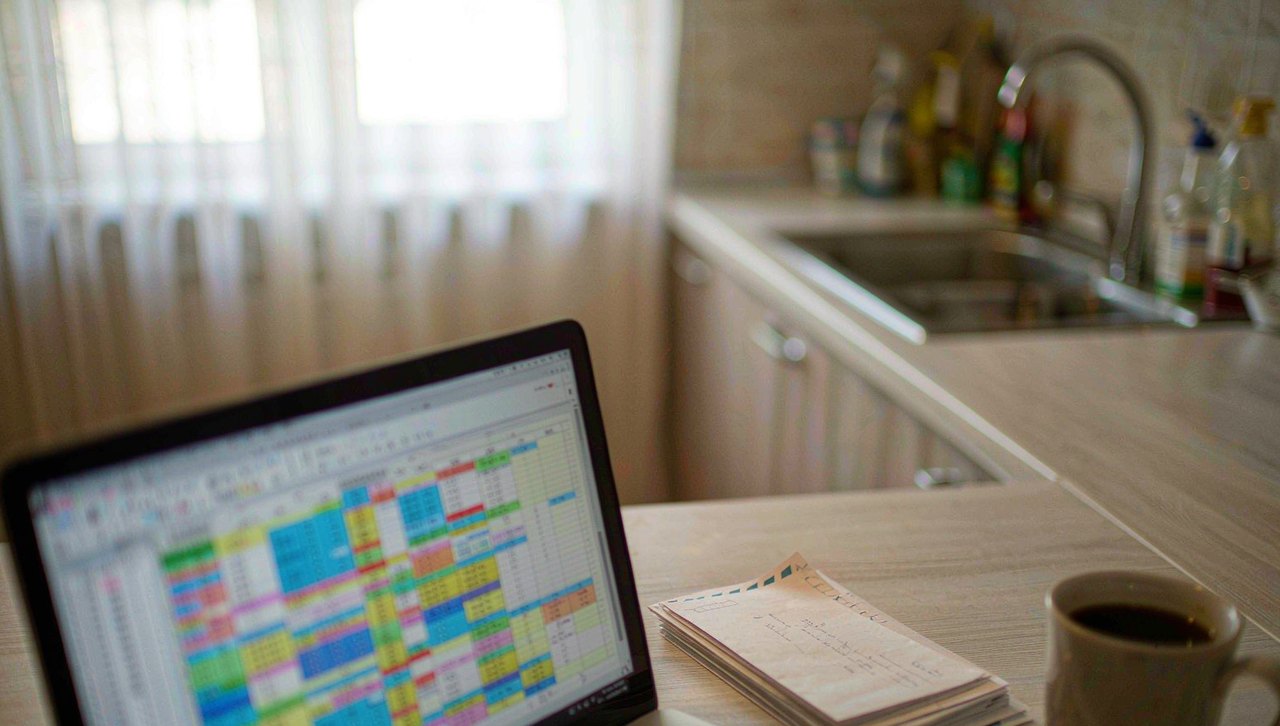
Document before anything happens. The inventory from earlier doubles as your claim evidence. Store the photos and a simple spreadsheet outside your apartment — cloud storage is fine — because the laptop with the only copy may be the one that burned.
Report theft to the police. For theft claims, carriers require a police report number. File it within 24 hours; many policies write this deadline into the conditions.
Do not throw damaged property away. After a fire or water loss, the adjuster may need to see items. Keep damaged belongings until the claim settles, even if that means bagging them in the garage.
A worked claim example
Say a kitchen fire damages your apartment and you carry exactly the policy from earlier: $30,000 replacement-cost property coverage, $1,000 deductible, $300,000 liability. The fire destroys $11,400 of furniture and electronics, three nights in a furnished short-term rental cost $540 above your normal rent while the unit is repaired, and the smoke-damaged couch and mattress — $2,100 to replace — are hauled away. Your property claim pays $11,400 + $2,100 - $1,000 deductible = $12,500, and loss of use pays the $540 separately. Without the policy you would be out $14,040; with it, you paid about $240 in premiums that year plus the deductible. The liability leg matters in the uglier version of the same story: if the fire spread to the neighbor's unit, repair costs could reach six figures, and that is the number liability coverage exists for.
The bottom line
Renters insurance is a rare product where the cost is trivial, the protection is broad, and the main risk is simply not having it. Roughly $200 a year covers the replacement of everything you own against fire, theft, and water damage, plus the liability scenario that could actually hurt your finances for a decade. Buy replacement cost coverage, size the limit with a real inventory, add a rider for jewelry above the cap, and bundle it with your auto policy. Then do the one thing most tenants never do: read your own policy's exclusion page before you need it.
Related guides: how large an emergency fund should be covers the deductible you would actually pay, and the Ledger & Cents blog index has the rest of our insurance and budgeting math.