What a Credit Card Cash Advance Actually Costs You
Pulling cash from a credit card looks identical to a purchase and costs several times more. The fee, the day-one interest, the missing grace period, and the cheaper ways to get the same $500.
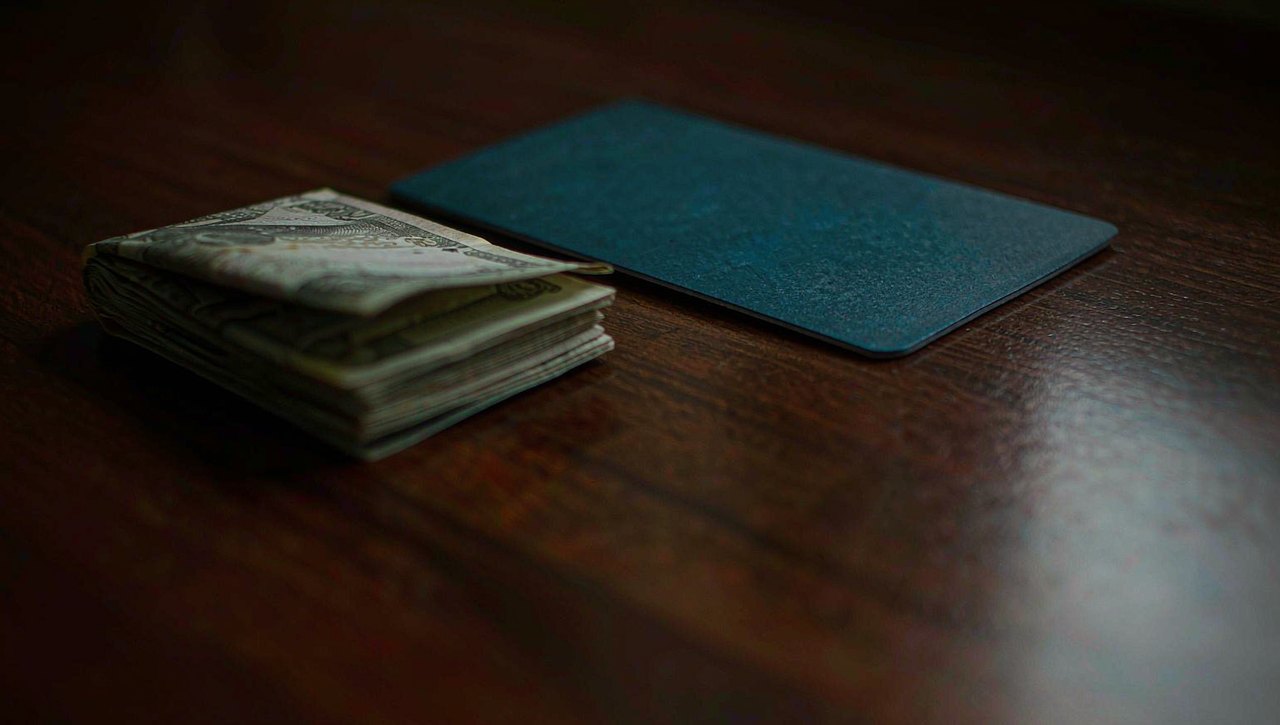
A cash advance is the ATM-with-a-credit-card option: instant money, no application, no one asking why. It is also one of the most expensive ways to borrow that exists, and the expensive part is hidden in plain sight on your card's own terms page. Most people who take one assume it works like a purchase they just repay late. It does not. This article walks through exactly what a typical $500 advance costs, why the meter starts running the moment the money leaves the machine, and what the cheaper alternatives are — using the numbers printed on real card agreements rather than vague warnings.
The three charges stacked on every advance
When you withdraw cash on a credit card, three separate costs hit at once:
- The cash advance fee. Typically the greater of 3–5% of the amount or a flat $5–$10. On a $500 advance at 5%, that is $25 from second zero.
- The cash advance APR. Card agreements list a separate APR for advances, and it is almost always higher than the purchase rate — on mainstream cards it commonly sits near the top of the card's range, around 27–30%. There is no promotional rate, no grace period, and no rewards.
- The machine's own fee. An ATM operator typically adds $3–$5, and out-of-network machines can add more. That fee goes to the ATM owner, not your card issuer, and it is on top of everything above.
Add it up for that $500 advance: $25 card fee, plus $3–$5 machine fee, plus interest from day one. You have paid roughly $28–$30 before a single day of interest is counted.
The missing grace period, in numbers
This is the part that surprises people. A normal purchase has a grace period: if you pay the statement balance in full by the due date, you pay zero interest. Cash advances have no grace period at all — interest starts accruing the day you take the money.
Here is the arithmetic, worked out so you can redo it with your own card's numbers. Assume a cash advance APR of 29.99% (a very common figure at the top of card ranges). The daily periodic rate is:
29.99% ÷ 365 = 0.0822% per dayOn a $500 balance, that is about $0.41 per day. Interest compounds daily, so the thirty-day cost is:
$500 × (1.000822^30 − 1) = about $12.47Repay the $500 after exactly one month and your total cost is the $25 fee plus roughly $12.50 interest plus the ATM fee — call it $40 to borrow money for thirty days. That is an effective annualized cost north of 90% once the fee is included, on top of a card you presumably already own. The identical $500 spent as a purchase and paid within the grace period would have cost $0.
How repayment order plays out
There is one rule that works in your favor. Under the CARD Act, when you pay more than the minimum, the issuer must apply the excess to the highest-APR balance first. Since the cash advance APR is usually the highest rate on the card, extra payments eat the advance before the purchases. But the minimum payment can be spread across balances, so a minimum-only payer can carry the advance for months at that $0.41-a-day meter and more. Six months of minimum payments on our example advance adds roughly $75 in interest to the original $25 fee — the same money, borrowed for half a year, at triple the sticker cost. The minimum-payment math in our minimum payment trap article covers why that repayment schedule is so slow.
The quieter costs
The fee and interest are the visible damage. Three smaller effects are worth knowing:
- Utilization bumps overnight. A $500 advance raises your reported balance, and utilization is the second-largest factor in credit scores. If the advance pushes you past the 30% line on that card, your score can dip even if you repay on time. Our utilization explainer covers the mechanics.
- No rewards, no protections. Advances earn no cashback or points, and purchases made with the proceeds have none of the dispute rights that card purchases carry.
- Issuers notice. Repeated advances are one of the behavior patterns card companies treat as a risk signal, which can matter the next time you request a limit increase.
What to do instead, ranked by cost
Same $500 need, cheaper paths. These are typical figures — your own terms govern.
- Debit card, if the money exists. Cost: $0–$3 in ATM fees. Any month where the cash is in checking, this is the whole answer.
- 0% purchase APR card, if you qualify and the timeline fits. Many mainstream cards carry an intro 0% purchase APR for 12–15 months. A $500 purchase repaid in three costs $0 if cleared before the promo ends — with the obvious caveat that the standard purchase APR applies retroactively-style afterwards, and the discipline burden is real.
- A small personal loan. Online lenders and credit unions commonly quote single-digit-to-low-teens APRs for good credit, with no fee on many credit union products. At 11% over three months, borrowing $500 costs about $13.75 in total interest — and unlike the advance, there is a fixed payoff date. The trade-off is a credit check and days of waiting rather than seconds.
- An employer paycheck advance or earned wage access. Many large employers offer same-cycle advances with no interest; tips may apply but the cost is usually a few dollars, not $40.
- A balance transfer you never make. If you already carry expensive debt, our balance transfer math shows when the 3% transfer fee beats the interest meter.
If you find yourself needing advances repeatedly, the borrowing method is not the problem — the gap between income and outflow is. That is a budget conversation, and our real-life budget guide and the sinking fund method are built for exactly the irregular expenses that make cash advances tempting.
Transactions that act like advances without asking
The ATM is not the only door into cash-advance pricing. Several ordinary actions get coded as cash advances, and the first sign is usually a fee on the statement:
- Convenience checks that arrive in the mail with your statement are processed as advances — sometimes at a promotional rate printed on the check itself, otherwise at the full advance APR plus fee. Read the check before writing it.
- Overdraft-style transfers that move money from your credit card to checking when the account runs dry are advances in nearly every card agreement.
- Cash-like purchases — peer-to-peer payment apps funded by credit card, money orders, prepaid card loads, cryptocurrency purchases on many exchanges, and wire transfers — are commonly coded as advances, meaning the fee applies to buying dinner for a friend through an app.
- Casino and gambling transactions are always in this category, and usually at the very top of the APR range.
The common thread: the merchant category code, not your intent, decides the pricing. If a transaction is cash-adjacent, assume advance rules apply and check the fee schedule first.
One more alternative most people never hear about
Federal credit unions offer a product built specifically to replace high-cost small borrowing: the Payday Alternative Loan, or PAL. Under National Credit Union Administration rules, a PAL I is $200 to $1,000, repayable over one to six months, with the APR capped at 28% and a one-time application fee capped at $20. On our benchmark $500 over three months, that works out to roughly $20 in interest at most plus the $20 fee — comparable to a cash advance at first glance, but with three differences that matter: the payoff date is fixed, the APR does not compound against you indefinitely, and completing the loan is reported to credit bureaus, which a cash advance never is. Membership requirements and availability vary by credit union, and PAL II (up to $2,000 with longer terms) has its own rules, so treat this as a category to ask about rather than a guaranteed product.
Compare that with the advance one more time: $40 for thirty days and no credit-building, versus roughly the same cost for a structured loan that reports positive repayment. For borrowers who will need small cash more than once, the PAL route quietly wins on every dimension except speed.
The short version
A cash advance charges a 3–5% fee, a higher-than-purchase APR, and starts the interest meter the same day, with no grace period to rescue you. On a typical $500 withdrawal, one month of borrowing costs around $40 all-in — versus $0 for the same money as a purchase paid in full. If cash is needed this week, a debit withdrawal, a paycheck advance, or a small loan each beat the ATM route, and if the need keeps returning, the durable fix is a sinking fund rather than a better way to borrow.
This article is general financial education, not financial advice. Card terms vary by issuer — the fee and APR on your own card agreement always govern. Figures labeled "typical" are common market ranges, not quotes.